





Quick answer
A 221(g) is a refusal under INA § 221(g) (8 U.S.C. § 1201(g)) that means your visa application is incomplete or requires further review — it is not a denial. The consular officer has either asked for more documents or placed your case in "administrative processing," the catch-all for security advisory opinions, interagency clearances (Mantis, Donkey, Condor, Hummingbird), and other background checks. Most 221(g) cases resolve once the missing item is submitted or the clearance clears; the frustration is that the consulate gives you almost no information and no deadline. In 2026 administrative processing routinely runs from a few weeks to many months, and a subset stretch past a year with no update. The two things that move a stuck case: (1) respond completely and fast to any document request, and (2) when delay becomes unreasonable, a writ of mandamus under 28 U.S.C. § 1361 in federal court forces the government to make a decision. Get the 221(g) sheet, read exactly what it asks for, and do not assume silence means denial.
What a 221(g) refusal actually is
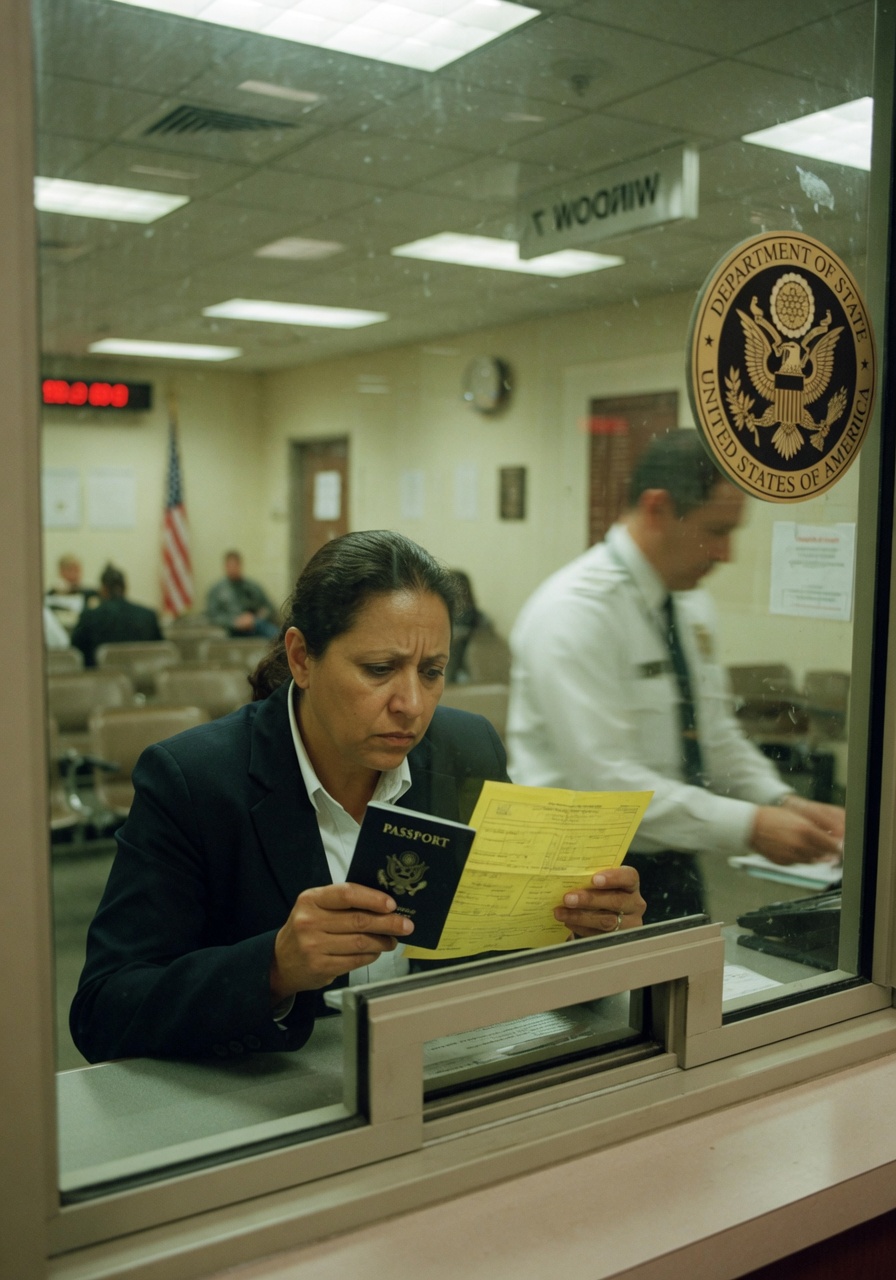
When a consular officer cannot issue your visa at the interview, they often hand you a colored slip — commonly called the 221(g) sheet — citing INA § 221(g). Technically this is a refusal: the law requires the officer to refuse any application that is not approvable as presented. But a 221(g) refusal is not the end. It is a placeholder that means one of two things:
- Your application is missing something — a document, a translation, a form, a fee, additional evidence — and the officer will issue the visa once you provide it.
- Your application needs further administrative processing — a background or security check the officer cannot complete at the window.
The distinction matters enormously. The first kind is in your control and usually clears in days or weeks once you respond. The second kind is largely out of your hands and is where cases disappear for months.
"Administrative processing" decoded
"Administrative processing" is the State Department's umbrella term for any review that happens after the interview but before a final decision. The most common drivers in 2026:
Security Advisory Opinions (SAOs) and interagency clearances
These are named clearance programs run with other agencies. The ones applicants encounter most:
- Mantis — technology-transfer and export-control review, common for applicants in science, engineering, and sensitive technical fields (the Technology Alert List). Frequently triggers long delays for students and researchers.
- Donkey — name-check / identity resolution when an applicant's name or biographic data matches entries in government databases.
- Condor — security review tied to certain nationalities or travel histories.
- Hummingbird / Eagle — other specialized clearances depending on the case profile.
You will rarely be told which clearance is running. The consulate's standard line is simply "your case requires additional administrative processing."
Document and evidence review
Sometimes processing is just the officer wanting to verify a relationship, an employment offer, financial documents, or civil records before issuing. This overlaps with the document-request type of 221(g).
Petition or fraud review
If the officer doubts the bona fides of the underlying petition (a marriage, a job offer), the case can be held for review or returned to USCIS — a far slower path discussed below.
Why your case is actually stuck
If weeks have passed with no movement, the cause is usually one of these:
- An outstanding document request you did not fully satisfy. This is the most common and most fixable. If the 221(g) sheet listed items, the clock often does not start until every item is submitted exactly as requested.
- A pending security clearance (Mantis/Donkey/etc.). These run on the agencies' timelines, not the consulate's, and the consulate cannot expedite them at will.
- Petition returned to USCIS for review or revocation. If the consulate sends your I-130/I-140 back to USCIS, the case can stall for a year or more in the National Visa Center / USCIS loop.
- A namesake / database hit requiring identity resolution.
- Simple backlog. Some posts are chronically slow; your case may just be in a queue.
Realistic 2026 timelines
There is no statutory deadline for administrative processing, and the State Department's own guidance says most cases resolve within about 60 days of the interview — but that is an average, not a promise. In practice in 2026:
- Document-only 221(g): often resolved within days to a few weeks after you submit the missing item.
- Routine administrative processing: commonly several weeks to a few months.
- Security clearances (Mantis and similar): frequently several months; some run six months to a year.
- Petition returned to USCIS: often a year or more, sometimes ending in revocation proceedings.
The honest answer most applicants hate to hear: the consulate genuinely may not be able to tell you when it will finish, because the clearance is being run elsewhere.
How to respond to a 221(g) document request
If your 221(g) sheet lists documents, this is the part you control — do it precisely:
- Read the sheet literally. Provide exactly what is listed, in the format requested. A missing translation or an unsigned form restarts the wait.
- Submit through the channel the post specifies. Some posts use email, some a courier/drop-box, some an online portal. Sending it the wrong way can mean it is never logged.
- Keep proof of submission. Save the email, the courier receipt, the portal confirmation, with dates.
- Submit everything at once. Partial responses often reset the case to the bottom of the queue.
- Mind any deadline. Under the regulations, if you do not provide the requested evidence within one year of the 221(g) refusal, the application can be terminated under INA § 203(g) and the underlying petition can be at risk. Do not let a document request sit.
How to check status and push for movement
- CEAC. Track the case status on the Consular Electronic Application Center (ceac.state.gov) using your case number — "Refused" there usually means 221(g)/administrative processing, not a true denial.
- Contact the post. Use the embassy/consulate's inquiry form or email after a reasonable interval. Be polite, specific, and include your case number and interview date.
- Congressional inquiry. Your U.S. senator's or representative's caseworker can submit an inquiry to the post or the State Department. This sometimes prompts a status update, though it does not force a decision.
- Manage expectations. None of these can force the consulate to finish a clearance. They surface status; they do not compel action. For that, there is mandamus.
When a writ of mandamus is the move
A writ of mandamus under 28 U.S.C. § 1361 (often paired with the Administrative Procedure Act, 5 U.S.C. § 555(b) and § 706(1)) is a federal lawsuit asking a U.S. district court to order the government to make a decision on a case that has been unreasonably delayed. Key points:
- It compels a decision, not an approval. Mandamus forces the agency to act — to adjudicate — not to grant the visa. Most often, filing prompts the government to finally complete processing and issue (or, less commonly, deny) within weeks.
- "Unreasonable delay" is the standard. Courts weigh the so-called TRAC factors (from Telecommunications Research & Action Center v. FCC): the length of delay, whether a rule of reason governs, the effect on human health and welfare, competing agency priorities, and bad faith. There is no bright-line month count, but cases delayed well beyond a year are stronger. (For how mandamus works step by step, see our guide on mandamus lawsuits to force a stuck case.)
- Consular non-reviewability is the wall. Courts generally cannot review the substance of a consular officer's visa decision (the doctrine of consular non-reviewability, reinforced by Department of State v. Muñoz (2024)). But mandamus targets the failure to decide, not the decision itself — which is why it remains viable for stuck-in-processing cases even after Muñoz narrowed substantive review.
- The practical effect. Once the U.S. Attorney's office is served and has to answer, the case usually gets pulled and finished. The leverage is the deadline a lawsuit imposes on a system that otherwise has none.
Mandamus is not free and not instant, and it is not right for every case — a case that is only a few weeks old or that has an outstanding document request you have not answered is not ready. But for an applicant who has done everything asked and waited many months with no end in sight, it is the one tool that reliably forces movement. The mechanics, costs, and candidacy factors are covered in depth in our mandamus lawsuits guide.
What NOT to do
- Do not assume 221(g) means denied. It does not. Treating it as a denial and reapplying from scratch can waste fees and time.
- Do not ignore a document request. The one-year termination rule under INA § 203(g) is real.
- Do not make new international travel or job-start commitments around an administrative-processing case. Timelines are unpredictable.
- Do not file mandamus prematurely. A court is unlikely to find a few weeks "unreasonable," and a premature suit wastes money.
- Do not submit conflicting information. New documents that contradict your interview answers can convert a delay into a fraud review.
Frequently asked questions
Is a 221(g) a visa denial?
No. A 221(g) is a refusal pending further action — either you owe a document or the case is in administrative processing. It becomes a true denial only if the application is ultimately refused on the merits or terminated for failure to respond.
How long does administrative processing take in 2026?
Document-only cases often clear in days to weeks after you submit. Routine processing runs weeks to a few months. Security clearances like Mantis can take several months to a year. There is no guaranteed timeline.
What is Mantis?
Mantis is a security advisory opinion focused on technology transfer and export control, frequently triggered for applicants in scientific, engineering, and other sensitive technical fields. It is one of the most common causes of long administrative-processing delays.
Can I do anything to speed it up?
Respond fully and quickly to any document request, track status on CEAC, contact the post after a reasonable interval, and consider a congressional inquiry. None of these forces a decision. A writ of mandamus is the tool that does.
Will a mandamus lawsuit get my visa approved?
Mandamus forces the government to decide, not to approve. In most stuck-in-processing cases, the decision that follows is issuance — but the court orders adjudication, not a grant.
Does consular non-reviewability block a mandamus suit?
No. Consular non-reviewability bars courts from second-guessing the substance of a visa decision. Mandamus challenges the failure to make a decision, which courts can still address — the distinction that keeps mandamus viable after Department of State v. Muñoz.
What happens if I miss the one-year deadline to respond?
Under INA § 203(g), failure to pursue the application within one year of the 221(g) refusal can terminate the registration and jeopardize the underlying petition. Always respond to document requests well before the year runs.
My case was sent back to USCIS. What does that mean?
The consulate doubted the petition and returned it for review or possible revocation. This is the slowest path — often a year or more — and is the situation where experienced counsel matters most.
A Modern Law Group practice note
The cases that resolve fastest are the ones where the applicant treated the 221(g) sheet as a precise checklist and answered it completely the same week. The cases that rot are the ones where the applicant either misread the request, sent documents through the wrong channel, or assumed nothing could be done and simply waited. When a case has genuinely stalled in administrative processing past the point of reason — everything submitted, many months gone, no end in sight — a mandamus action is usually what finally breaks it loose, because it puts a court deadline on a process that otherwise has none.
If your visa has been in administrative processing for months, bring the 221(g) sheet, your interview date, and your case number to a consultation. The right next step depends on which kind of 221(g) you have and how long the clock has run.